Hearts Digital Papers Patterns: A Practical Guide to Choosing the Right Digital Paper for Your Projects
When you are planning a creative project, the choice of background material often sets the entire tone. Whether you are designing a wedding invitation, a birthday card, a social media banner, or a scrapbook layout, the texture and pattern of your paper matter more than you might think. Hearts Digital Papers Patterns have become a go-to resource for many crafters and designers, but understanding what they offer, how they compare with other options, and when they are the best fit requires a closer look. This article breaks down the practical aspects of this digital paper set, helping you decide if it aligns with your project needs.
What Hearts Digital Papers Patterns Offer
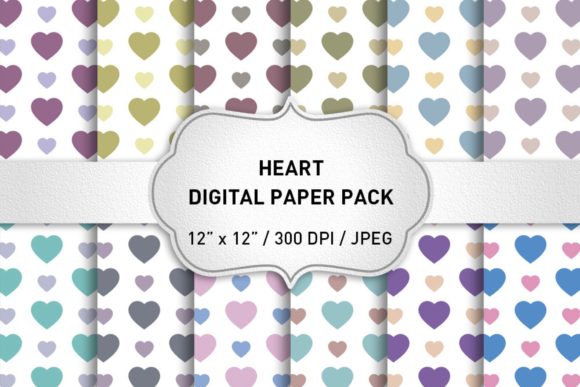
At its core, this collection includes 12 high-resolution JPEG files, each measuring 12 x 12 inches (305 x 305 mm, 3600 x 3600 pixels) at 300 dpi. That resolution is a critical detail. It means the papers are crisp enough for professional printing without visible pixelation, yet they are equally suitable for on-screen use where sharpness matters, such as website backgrounds or social media graphics. The 12-inch square format is a standard in scrapbooking and card making, so you can print them without needing to resize or crop awkwardly.
The hearts theme itself is versatile. It is not limited to romantic occasions. Depending on the colour palette and pattern style, these papers can work for Valentine's Day, anniversaries, baby showers, wedding stationery, love-themed party decor, or even everyday craft projects where a subtle heart motif adds warmth. The set typically includes a mix of repeating patterns, scattered motifs, and possibly some tonal or textured backgrounds, giving you variety within a cohesive theme.
How This Format Compares with Other Digital Paper Options
Digital paper sets come in many forms, and understanding the differences helps you choose wisely. Hearts Digital Papers Patterns follow a common approach: a fixed number of JPEG files at a standard size and resolution. This is a familiar format for most crafters and designers, but it is worth comparing it with other possibilities you might encounter.
JPEG vs. PNG: What the File Format Means for You
This set uses JPEG files, which is typical for photographic or richly patterned papers. JPEG compression keeps file sizes manageable while preserving good colour depth. However, JPEG does not support transparency. If you need to layer papers over other elements and want the background to disappear, a PNG set might be preferable. For most scrapbooking and card-making projects, where you are placing the paper as a full background or cutting shapes from it, JPEG works perfectly well. The tradeoff is that if you plan to use these papers as overlays or in complex digital composites where transparency is essential, you may need to manually remove backgrounds or stick to layering them as solid rectangles.
Resolution and Size: Why 300 dpi and 12x12 Matter
The 300 dpi resolution is a professional standard. Many cheaper or free paper sets offer only 72 or 150 dpi, which looks fine on screen but produces blurry or soft prints. If you are creating printed items like cards, invitations, or tags, 300 dpi is worth prioritising. The 12x12 inch size is generous. Standard scrapbook albums often use 12x12 pages, so these papers can fill a full spread without tiling. For smaller projects, you can crop down to 8.5x11, A4, or even square social media sizes without losing quality. The limitation is that if your project requires a non-square aspect ratio, such as a wide website banner or a tall poster, you will need to crop or tile the design, which may affect the pattern continuity.
Number of Designs: 12 Papers as a Starting Point
With 12 unique patterns, this set offers enough variety for a single themed project or a small batch of coordinated items. You might use one pattern for the background of an invitation, another for the envelope liner, and a third for matching tags. For a larger project, such as an entire wedding suite with multiple printed pieces, 12 papers may be sufficient if you mix and match cleverly. If you need extensive variety or a very large selection of patterns, you might look for a larger bundle or a subscription service. However, the focused nature of a 12-paper set often means higher quality in each design, as each pattern is curated rather than mass-produced.
Strengths of Hearts Digital Papers Patterns
Several characteristics make this set a strong contender for many creative projects.
- Immediate usability. The files are ready to download and use in virtually any design software, from Adobe Photoshop and Illustrator to free tools like Canva, GIMP, or even Microsoft Word and PowerPoint. No special plugins or skills are needed.
- Consistent theme coordination. Because all 12 papers come from the same collection, they share a coherent aesthetic. You can mix them confidently without worrying about clashing styles or colour mismatches.
- Print-ready quality. The 300 dpi resolution ensures professional results whether you print at home or use a commercial printing service. The 12x12 size also accommodates standard paper sizes with minimal waste.
- Versatility across media. These papers work for both physical and digital projects. You can print them for scrapbooking, card making, and invitations, or use them digitally for website backgrounds, social media graphics, and blog headers.
- Time savings. Designing your own heart-themed patterns from scratch takes considerable time and skill. Buying a coordinated set eliminates that effort, allowing you to focus on layout and assembly.
Limitations and Tradeoffs to Consider
No product is perfect for every situation. Being aware of the limitations helps you avoid frustration later.
- No customisation of individual elements. The papers are flat raster images. You cannot easily change the colour of a single heart, resize specific motifs, or rearrange the layout. If you need full control over every design element, a vector-based pattern set or creating your own patterns from scratch might be better.
- Fixed size. While 12x12 is generous, it is square. If your project requires a long banner, a tall poster, or an irregular shape, you will need to adapt the paper, which may involve visible seams or awkward cropping.
- Limited to one theme. This set is explicitly heart-themed. If your project calls for florals, geometric shapes, or abstract textures, this collection will not serve you. It is a specialised set, not a general-purpose one.
- JPEG compression artifacts. Although high-resolution JPEGs are excellent for most uses, heavy editing or repeated saving can introduce compression artifacts. If you plan to extensively manipulate the papers, consider working with a copy and saving in a lossless format like TIFF or PNG during your editing process.
When Hearts Digital Papers Patterns Are the Right Choice
This set shines in specific scenarios. If your project revolves around love, affection, or a heart-themed aesthetic, these papers provide a quick, cohesive foundation. They are particularly well-suited for:
- Valentine's Day cards, gifts, and decorations.
- Wedding invitations, save-the-dates, and thank-you cards.
- Anniversary party decor and personalised gifts.
- Baby shower stationery, especially for a love-themed shower.
- Scrapbook layouts documenting romantic events or cherished relationships.
- Social media graphics for heart-themed promotions or content.
- Craft projects where you want a polished, professional look without designing from scratch.
If you value convenience, consistency, and print-ready quality, and your project fits the heart theme, this set offers excellent value. The 12-paper count is enough to create a coordinated set of printed materials without overwhelming you with choices.
When You Might Need a Different Option
There are situations where another approach may serve you better. Consider your alternatives if any of the following apply:
- You need a non-heart theme. This is obvious but worth stating. If your project is for a corporate event, a birthday with a different motif, or a nature-themed layout, look for a paper set that matches that specific theme.
- You require full design flexibility. If you want to adjust colours, resize elements, or create custom compositions, a vector pattern set (in SVG or AI format) or a pattern-making tool gives you that control. Raster papers are a finished product, not a starting point for pattern design.
- You are working with non-standard sizes. For a wide website banner, a tall Instagram Story, or an unusual print format, you may find yourself struggling to adapt a square paper. In such cases, a pattern that tiles seamlessly and can be scaled indefinitely might be more practical.
- You need a larger variety for a long-term project. If you are designing an entire wedding suite with dozens of pieces, 12 patterns may feel limiting. Consider a larger bundle or a design system that allows you to generate variations.
- Your primary use is digital only and you need transparency. For layering papers over other digital elements, PNG files with transparent backgrounds are more convenient. You can convert JPEGs, but it is an extra step.
Making an Informed Decision
When evaluating Hearts Digital Papers Patterns or any similar digital paper set, ask yourself a few practical questions.
- What is the final output? If you are printing, 300 dpi and 12x12 size are strong advantages. If you are using the papers exclusively on screen, lower resolution might suffice, but the extra quality does no harm.
- How many coordinated pieces do you need? For a single card or a small set of matching items, 12 papers are plenty. For a large, multi-piece project, evaluate whether the set provides enough visual variety.
- Do you need to edit the pattern itself? If yes, look for vector or editable formats. If no, pre-made raster papers save time and effort.
- Does the theme align with your project? Heart patterns are beautiful but specialised. Be honest about whether the motif fits your audience and occasion.
- What is your skill level? For beginners or those who want quick results, a ready-to-use JPEG set is nearly foolproof. For advanced designers who want complete control, other formats may be more appealing.
Realistic Examples of Use
Imagine you are creating a set of thank-you cards for a wedding. You could use one heart pattern for the card front, a second for the envelope liner, and a third for a matching tag. With 12 patterns, you could create a small suite of coordinated pieces without repeating any design. If you later decide to make matching place cards or a banner, you still have patterns left.
Alternatively, consider a digital scrapbook page documenting a couple's engagement. A subtle heart pattern as the background adds romance without overwhelming the photos. You could use a bolder pattern for the title banner or for matting specific images. The high resolution ensures that when you zoom in or print the page, the pattern remains sharp.
On the other hand, if you were designing a series of social media posts for a bakery's Valentine's Day campaign, a heart pattern could serve as a consistent background element across multiple posts. The 12x12 size is easy to crop to a square Instagram post or a vertical story, though you would need to reposition the focal area for different aspect ratios.
Final Thoughts on Hearts Digital Papers Patterns
Choosing the right digital paper set comes down to matching the product's strengths with your project's specific needs. Hearts Digital Papers Patterns offer a focused, high-quality solution for anyone working on a heart-themed project, whether printed or digital. The 300 dpi resolution, generous 12x12 size, and coordinated 12-paper selection provide a solid foundation for creative work without unnecessary complexity.
By understanding what this set includes, how it compares with other approaches, and where its limitations lie, you can make a confident decision. If the heart theme fits your project and you value convenience and professional quality, this set is a practical choice. If you need more flexibility, a different theme, or a larger volume of designs, exploring other options makes sense. The key is to evaluate your priorities and choose accordingly.