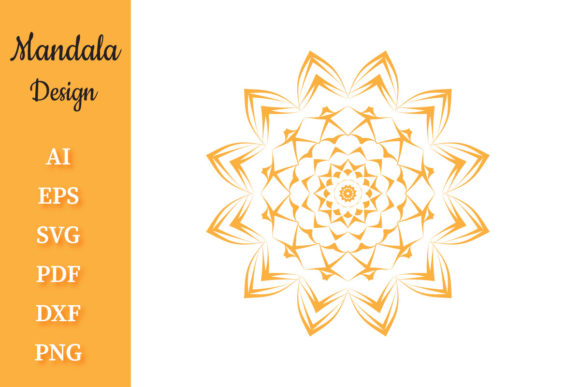
Mandala Design for Patterns Vol.24: A Strategic Asset for Creative and Commercial Projects
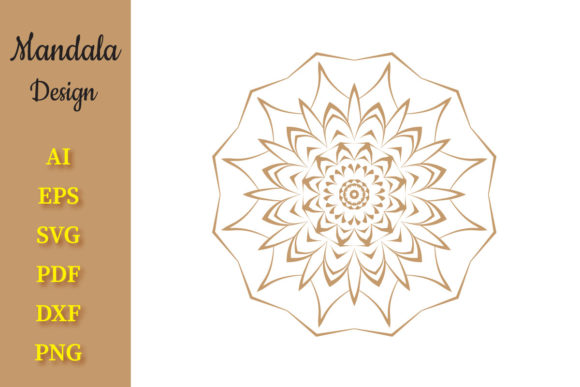
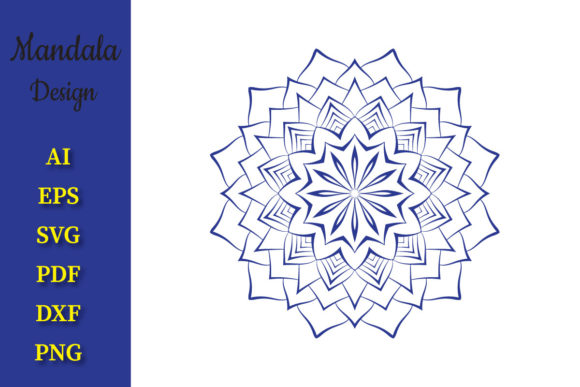
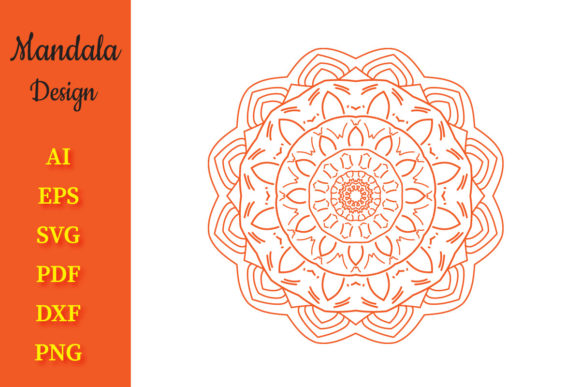
For professionals working across design, branding, publishing, or product development, the search for reliable, high-quality pattern resources rarely ends with a single download. The challenge is not just finding something that looks good—it is finding something that works across formats, scales with your needs, and maintains integrity whether printed on packaging or displayed on a screen. Mandala Design for Patterns Vol.24 addresses this gap directly. It offers a collection of mandala patterns built for practical, repeatable use, supported by a full set of print-ready files including AI, EPS, PNG, SVG, DXF, and PDF formats. The value here is not aesthetic alone—it is structural, operational, and strategic.
Why Mandala Patterns Belong in Your Workflow
Mandala designs have long been associated with balance, symmetry, and visual rhythm. When applied to patterns, these characteristics make them unusually versatile. They can function as background textures, central motifs, or repeating elements in layouts. For entrepreneurs and freelancers managing tight timelines, having a pattern library like Mandala Design for Patterns Vol.24 means you reduce the time spent on original vector construction. Instead, you begin with a production-ready asset that can be adapted, recolored, or resized to fit your specific project requirements.
From a planning perspective, this shifts your focus from creation to implementation. You spend less time building from scratch and more time refining how the pattern serves your broader goal—whether that goal is brand recognition, packaging consistency, or visual storytelling in a publication.
Branding and Identity Work
Marketers and small business owners often need visual elements that convey coherence without being repetitive. Mandala patterns can serve as subtle brand markers on business cards, website backgrounds, or social media templates. With Mandala Design for Patterns Vol.24, you have multiple patterns to test against different brand color palettes. The SVG and EPS formats allow you to edit anchor points, adjust thickness, and isolate elements without degrading quality. This matters when you are building a visual system that must remain consistent across print and digital touchpoints.
Product Packaging and Surface Design
If you manufacture or package physical goods, pattern selection directly affects shelf appeal and customer perception. The download includes DXF files, which are compatible with cutting machines and engraving tools. This means you can take a mandala pattern from a digital concept to a physical product—stationery, fabric, gift wrap, or even laser-cut packaging—without needing to redraw the design. For decision-makers evaluating production workflows, this reduces the gap between concept and output.
Educational and Training Materials
Educators and content creators often require visual elements that support focus without distracting from the core message. Mandala patterns, when used as borders, section dividers, or page backgrounds, can improve the visual hierarchy of worksheets, manuals, or presentations. Mandala Design for Patterns Vol.24 gives you a set of neutral yet structured patterns that work well in both digital slides and printed handouts. The PDF and PNG formats ensure compatibility with common classroom and publishing tools.
When to Use Mandala Patterns for Maximum Impact
Using pattern assets indiscriminately can dilute their effect. Strategic timing and context matter. Consider integrating Mandala Design for Patterns Vol.24 into your workflow during the following stages:
- Early concept development: Use the patterns as visual anchors when pitching design directions to clients or stakeholders. The variety in the collection helps illustrate how a single theme can be interpreted across formats.
- Pre-production planning: Before finalizing print runs or digital assets, test patterns in low-resolution previews. The inclusion of PNG files makes this step efficient without compromising the final output.
- Post-launch iteration: Even after a project is live, pattern assets remain useful for updating collateral, refreshing seasonal campaigns, or expanding a product line with consistent visual language.
How to Approach Pattern Selection with Intent
Not every pattern suits every medium. A design that reads clearly on a large poster may become cluttered on a business card. When working with Mandala Design for Patterns Vol.24, consider the following criteria before committing to a pattern for a specific application:
- Scale and repeatability: Test how the pattern tiles at different sizes. In Illustrator, use the pattern swatch feature with the AI file to preview seamless repeats. This helps you avoid unwanted seams or awkward breaks.
- Line weight and density: Patterns with fine lines may lose definition in small-scale print or low-resolution digital displays. If your output is small, choose patterns with stronger contrast and thicker strokes.
- Color adaptability: The EPS and SVG files allow you to globally change colors without affecting the underlying geometry. Before finalizing, simulate your brand palette on at least three different patterns from the set to see which combination feels most natural.
Planning for Long-Term Asset Value
One of the overlooked aspects of design assets is their shelf life. A pattern that works for a single project and is never used again represents a lost opportunity. Mandala Design for Patterns Vol.24 is structured as a library, not a one-off graphic. Because the files are provided in multiple formats, they can be archived and retrieved years later without worrying about software compatibility or resolution degradation.
For freelancers and small business owners, this means building a reusable resource. A pattern used in an early brand guide can later be repurposed as a watermark, a textile print, or a decorative element in a new product line. The intentional selection of formats—especially AI and EPS for scalable vector work, and SVG for web and UI integration—extends the practical life of each design.
Risks of Using Patterns Without Clear Objectives
As with any creative tool, using a pattern without a defined purpose can undermine your project. Common pitfalls include:
- Visual overload: Layering multiple strong patterns in the same layout can confuse the viewer. Stick to one pattern per composition, or use patterns only in designated zones such as headers, borders, or backgrounds.
- Format mismatch: Using a raster format like PNG when vector scalability is needed can lead to pixelation in large prints. Always match the file format to your output medium. For print, prefer AI, EPS, or PDF. For responsive web design, SVG offers the best balance of quality and file size.
- Lack of originality: Relying solely on a pre-made pattern without customization can result in a generic look. Even small adjustments—changing stroke width, rotating the pattern, or overlaying a color gradient—can make the design feel unique to your project.
By acknowledging these risks, you can approach Mandala Design for Patterns Vol.24 with a critical eye and use it as a starting point rather than a final product.
Practical Examples of Intentional Use
Consider a scenario where a freelance designer is creating a set of journal covers for a client. Using Mandala Design for Patterns Vol.24, they select three distinct patterns. For a wellness journal, they use a fine-line mandala in muted earth tones. For a productivity planner, they choose a denser, more geometric pattern in cool blue. For a gratitude journal, they opt for an open, airy design with warm accents. Each pattern is extracted from the same collection but applied with different colors and scales to match the theme of each product. The result is a cohesive series that shares a visual DNA without feeling repetitive.
In another example, a marketing professional preparing a seasonal email campaign uses a single mandala pattern as a repeating background element in the hero section. By adjusting the opacity and rotating the pattern slightly, they create a soft texture that supports the headline without competing with it. The SVG format ensures the pattern renders cleanly across email clients.
Making the Decision to Invest in a Pattern Collection
Before purchasing or downloading any design asset, it helps to evaluate it against your actual workflow. Ask yourself: Does this collection cover the formats I need? Can I edit it without specialized tools? Will it remain usable if I change software versions? Mandala Design for Patterns Vol.24 answers these questions with its multi-format package. The inclusion of AI and EPS files supports Adobe users, while SVG and DXF extend compatibility to web designers, CNC operators, and those using open-source vector tools. The high-quality PNG files serve as quick previews or final assets for digital-only projects.
For professionals who value time, consistency, and flexibility, this collection eliminates the friction of converting or recreating patterns. Instead, you focus on the decisions that matter: which pattern communicates the right tone, how it integrates with your existing visuals, and whether it helps your audience understand your message more clearly.
Long-Term Strategic Thinking with Pattern Assets
Patterns are not decorative afterthoughts. They are structural components of visual communication. Used well, they reinforce recognition, guide attention, and create emotional resonance. Mandala Design for Patterns Vol.24 offers a foundation for that kind of intentional design work. By treating it as a resource to be adapted, archived, and reapplied across projects, you build a library that grows in value with each use.
Whether you are launching a brand, designing a publication, or producing physical products, the question is not whether you need patterns—it is whether you have the right ones, in the right formats, ready when you need them. This collection addresses that need directly, giving you the freedom to focus on strategy, execution, and results.