Mandala Design for Patterns Vol.17: A Strategic Asset for Creative Projects
Pattern libraries are often treated as decorative afterthoughts, but the most effective creators and business owners know that the right design resource can shape how an audience perceives a brand, how efficiently a team operates, and how consistently a message lands. Mandala Design for Patterns Vol.17 is not simply a collection of ornamental motifs—it is a ready-to-use structural tool that can streamline production, maintain visual coherence, and free up mental energy for higher-level decisions. Understanding what this volume offers and how to deploy it with intention can transform a scattered creative process into a deliberate, repeatable workflow.
This article examines the strategic value of Mandala Design for Patterns Vol.17, the practical ways it supports long-term goals, and the considerations that separate effective use from superficial application. Whether you are a freelancer managing multiple clients, a marketer building a consistent brand presence, or a small business owner producing your own collateral, the insights here will help you decide if this resource fits your needs and how to use it for maximum impact.
What Makes Mandala Design for Patterns Vol.17 a Practical Resource
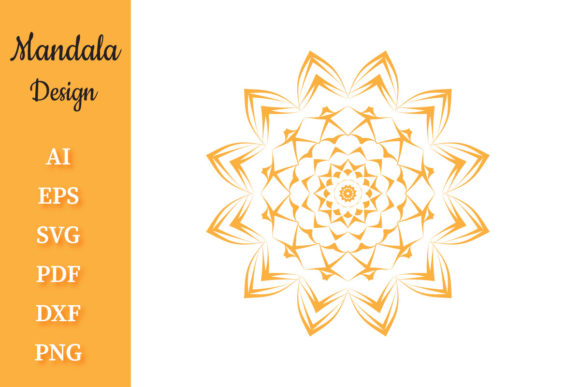
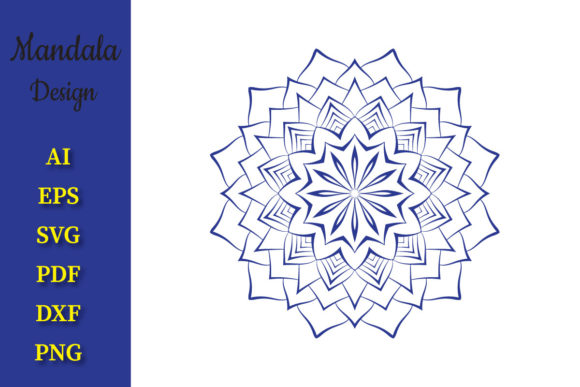
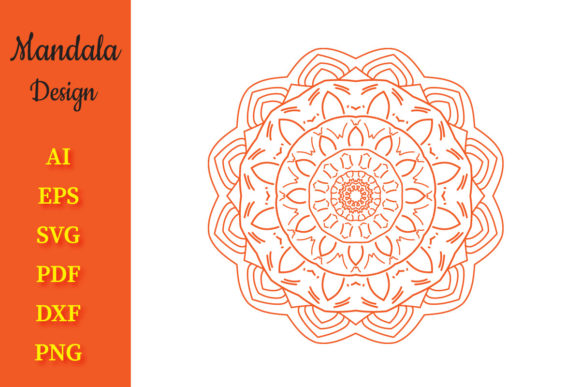
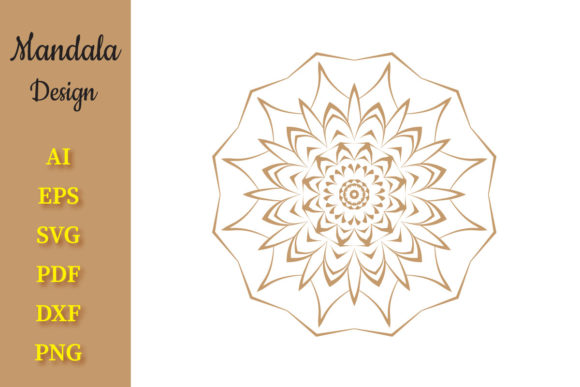
At its core, Mandala Design for Patterns Vol.17 is a curated set of printable, editable pattern files built around mandala-inspired geometry. The download includes Adobe Illustrator AI and EPS files for the CS CC versions, along with high-quality PNG, SVG, DXF, and PDF formats. This means that whether your workflow is vector-based, raster-focused, or oriented toward cutting machines, the same design can be adapted without rework.
The strategic value lies in the format versatility. Instead of spending hours redrawing a pattern for different use cases—print, web, signage, packaging—you have a single source that exports cleanly into almost any environment. For a professional juggling tight deadlines, that flexibility is not a luxury; it is a time-saving mechanism that reduces friction between concept and final product.
Moreover, mandala designs carry inherent structural qualities: radial symmetry, repeating elements, and balanced composition. These features make them suitable for backgrounds, borders, textiles, branding elements, and even data visualization frames. The patterns in Vol.17 are pre-optimized for print readiness, meaning less time troubleshooting resolution, color shifts, or scaling issues.
Strategic Alignment: How Vol.17 Supports Planning and Positioning
Creative assets are most valuable when they map directly to a broader plan. Before opening any design file, consider where mandala patterns can reinforce your positioning or operational goals.
Brand Consistency Across Multiple Touchpoints
One of the most overlooked aspects of branding is visual repetition. A pattern that appears on a website header, a product label, a social media graphic, and a printed brochure creates a subconscious sense of reliability. Mandala Design for Patterns Vol.17 provides a unified visual language that can be applied across all these surfaces without distorting the core design. For a small business owner or marketer, this reduces the risk of brand fragmentation—where different materials feel like they belong to different companies.
When you have a single vector source (the AI or EPS file), you can adjust colors, scale, and orientation while preserving the original geometry. This means your brand colors can be applied systematically, and the pattern remains recognizable even when resized for a business card versus a billboard.
Operational Efficiency for High-Volume Projects
For creators who produce large quantities of content—think product photographers needing consistent backdrops, print-on-demand sellers designing multiple items, or event planners creating coordinated stationery—the ability to reuse and adapt one pattern set is a direct productivity gain. Instead of designing a new background for each item, you can rotate, mirror, or crop elements from Vol.17 to generate variety without starting from scratch.
The SVG and DXF files also open up possibilities for laser cutting, CNC routing, or embroidery digitizing. If your business involves physical goods, these formats eliminate the need to convert or redraw artwork for manufacturing equipment. That is a tangible reduction in both production time and error risk.
When and How to Use Mandala Design for Patterns Vol.17
Knowing what the resource contains is only half the equation. The other half is understanding the scenarios where it adds value and the contexts where it might work against your goals.
Ideal Use Cases
- Brand backdrops and textures: Use the PNG or PDF files as subtle background layers for websites, presentations, or print materials. Because mandala patterns are symmetrical, they tile seamlessly and do not distract from foreground content.
- Product packaging and labels: Vector files allow you to wrap patterns around cylindrical or irregular surfaces without distortion. This is particularly useful for small-batch producers who want an artisanal look without hiring a designer for every SKU.
- Educational and instructional materials: Educators and trainers can use the patterns as borders, dividers, or visual anchors in worksheets, handouts, and slide decks. The structured geometry aids visual organization and makes materials feel more polished.
- Social media templates: A consistent pattern frame for Instagram posts, Facebook covers, or LinkedIn banners builds recognition. The high-quality PNG files can be layered with text and logos without losing resolution.
- Physical goods and crafts: The DXF format is compatible with cutting machines like Cricut or Silhouette, making it straightforward to produce stickers, decals, fabric appliqués, or home décor items.
Approaching the Design Intentionally
Resist the urge to use a mandala pattern simply because it looks attractive. Ask yourself: What function does this pattern serve in my project? If it is purely decorative, ensure it does not compete with your primary message or call to action. A common mistake is selecting a pattern with too much detail for a small space, causing visual noise. The files in Vol.17 are scalable, but scaling down a complex mandala can make it appear cluttered if not tested at the target size.
Start by opening the AI or EPS file in your vector software and experimenting with color overlays, opacity, and scale. Because the patterns are pre-constructed, you can spend your creative energy on adaptation rather than construction. Create a few variations—a light version for backgrounds, a bold version for accents, a monochrome version for print—and save them as reusable assets. This turns a single download into a modular toolkit.
Strategic Observations and Planning Tips
Experienced practitioners know that the value of a design resource is determined less by its visual appeal and more by how well it integrates into existing systems. Here are several observations that can guide your decision-making.
Consider your file management. The download includes multiple formats. Organize them by format type and by use case. For example, keep the vector files in your master design folder and export the PNG and PDF versions into project-specific folders. This prevents version confusion and ensures that when you need to edit a pattern, you always return to the editable source file.
Plan for scaling. If you anticipate using the same pattern across a wide range of media, test the pattern at its smallest and largest intended sizes early in the process. A pattern that looks elegant on a poster may lose its definition on a business card. The vector files allow infinite scaling without quality loss, but the visual density of the design still matters. Simplify the pattern for very small applications by removing fine lines or reducing contrast.
Think about color strategy. The mandala designs in Vol.17 are format-ready, but color is where you make them your own. Align the palette with your brand guidelines or the emotional tone of the project. Warm tones can evoke tradition and comfort, while cool tones suggest calm and precision. Because the patterns are geometry-based, even a two-color version can feel sophisticated.
Use patterns as structural guides. Mandalas are inherently radial and symmetrical. This makes them excellent frameworks for layouts that require balance—such as infographics, certificates, or menu designs. You can align text or icons along the radial axes of the pattern, creating a sense of order without rigid grid lines.
Risks of Using Mandala Patterns Without Clear Goals
No resource is risk-free when applied without context. The most common pitfall with decorative pattern sets is over-application. When a pattern appears in every piece of communication, it loses its impact and can begin to feel repetitive or cheap. This is especially true for mandalas, which carry cultural and spiritual connotations for some audiences. Using them purely as decoration without sensitivity to their meaning can create unintended dissonance.
Another risk is format mismatch. While the download includes multiple file types, not every format is appropriate for every output. For instance, using a raster PNG for a large-format print may result in pixelation if the resolution is not sufficient for the intended size. Always verify that the file format matches the medium. The vector formats (AI, EPS, SVG, DXF) are generally safer for scaling, while PNG and PDF are better suited for fixed-size outputs.
There is also the danger of style fatigue. If your entire visual identity leans too heavily on one pattern family, audiences may perceive a lack of freshness over time. Rotate patterns, vary color schemes, and combine the mandala elements with other design treatments to maintain visual interest. Treat Vol.17 as a foundational layer rather than the entire visual architecture.
Using Mandala Design for Patterns Vol.17 Intentionally for Long-Term Results
The most successful creative professionals do not use resources randomly. They build systems around them. Here is how you can integrate this pattern set into a sustainable workflow.
Create a pattern library. Open the AI file and extract individual motifs or segments. Save them as separate symbols or graphic styles in your design software. This allows you to mix and match elements across projects without opening the full file each time. Over weeks and months, you will develop a personal library of adapted components that speed up your work.
Document your usage. Keep a simple log of where and how you applied each pattern variation. Note the color palette, the medium, and the intended effect. This documentation helps you avoid repeating the exact same look and gives you a reference for what worked well in the past. For a marketing team or freelancer managing multiple brands, this practice prevents accidental visual overlap between clients.
Test before committing. Before rolling out a pattern across a full campaign or product line, test it with a small subset of your audience or in a low-stakes context. A social media post, a single product variant, or a draft presentation can reveal whether the pattern supports or distracts from your message. Adjust based on feedback rather than assuming the pattern will work everywhere.
Combine with other design systems. Mandala patterns pair well with minimalist typography, solid color blocks, and photographic cutouts. Use them as accents rather than primary backgrounds to create contrast. A pattern that covers 20 percent of a layout often feels more intentional than one that covers 80 percent. Let the pattern breathe.
Final Considerations for Decision-Makers
Mandala Design for Patterns Vol.17 is a print-ready, multi-format resource that can serve a wide range of professional and creative applications. Its true value emerges when you treat it as a strategic component of a larger system—not as a quick visual fix. Whether you are planning a brand refresh, streamlining your production pipeline, or looking for consistent design elements across physical and digital products, the combination of vector and raster formats gives you control and flexibility.
Take the time to explore the files, experiment with adaptations, and map each pattern to a specific purpose. By doing so, you move from simply decorating to deliberately designing. That shift in approach is what separates projects that feel cohesive and purposeful from those that feel scattered. And in a competitive landscape where attention is scarce, cohesion is a strategic advantage worth investing in.