Geometric Seamless Patterns: The Complete Guide to Timeless Design Elements
Geometric seamless patterns are among the most versatile and enduring tools in the designer's toolkit. Whether used as wallpaper, background, texture, or decorative illustration, these repeating motifs offer endless creative possibilities. In this guide, we'll explore what geometric seamless patterns are, why they matter, how they are created, and how you can use them effectively in your own projects.
What Are Geometric Seamless Patterns?
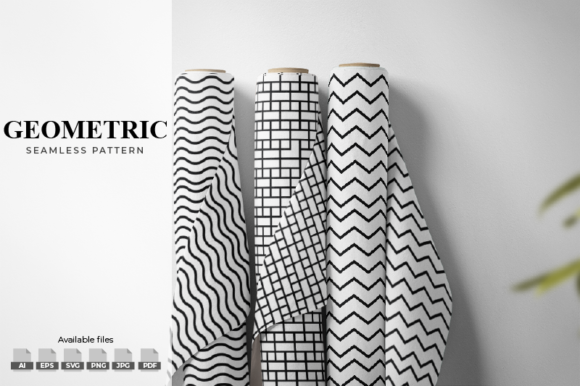
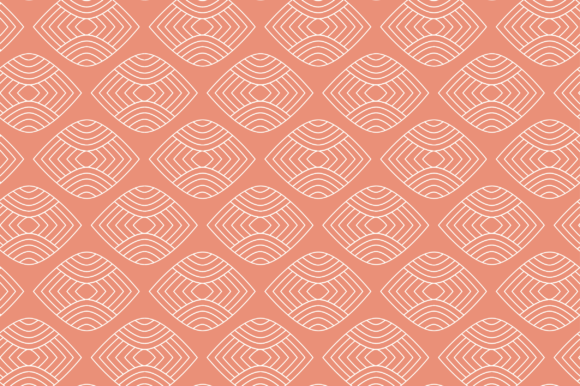
A geometric seamless pattern is a repeating design based on geometric shapes—such as circles, squares, triangles, hexagons, and diamonds—that tiles infinitely without any visible seams or interruptions. The term "seamless" means that when the pattern repeats, the edges match perfectly, creating a continuous, uninterrupted visual flow.
These patterns can range from simple grids and stripes to complex, intricate arrangements that appear almost organic despite their mathematical foundation. The core principle is that the design repeats evenly in both horizontal and vertical directions, making it ideal for covering large surfaces.
Key Characteristics of Geometric Seamless Patterns
- Repeatability: The pattern tiles without visible breaks or mismatches.
- Geometric Foundation: Shapes are based on mathematical principles, giving the pattern structure and order.
- Versatility: Suitable for both digital and physical applications.
- Scalability: Can be resized without losing clarity or design integrity, especially when created as vector graphics.
- Timelessness: Geometric designs have been used for centuries and remain relevant across design trends.
The Historical Significance of Geometric Patterns
Geometric patterns are not a modern invention. They have appeared in art, architecture, and decoration for thousands of years. From the intricate girih tiles of Islamic art to the classical Greek meander patterns, geometric designs have been a fundamental part of human visual culture.
In ancient civilizations, geometric patterns often carried symbolic meaning. The endless repetition could represent infinity, the cosmos, or the cycles of nature. Today, while we may not always assign the same symbolic weight, the visual appeal of these patterns remains as strong as ever.
The Bauhaus movement in the early 20th century brought geometric abstraction to the forefront of modern design, emphasizing function and simplicity. This influence is still visible in contemporary graphic design, architecture, and product design.
Why Geometric Seamless Patterns Matter Today
In an era of digital design and mass production, geometric seamless patterns serve multiple important purposes across industries. They provide structure, consistency, and visual interest without overwhelming the viewer. Here are some of the key reasons they remain essential:
- Visual Consistency: Seamless patterns ensure that backgrounds, textures, and decorative elements look uniform across any surface or screen size.
- Efficiency: Once created, a single pattern can be used repeatedly, saving time and resources in design projects.
- Brand Identity: Many businesses use custom geometric patterns to create recognizable brand assets that reflect their values—such as precision, innovation, or reliability.
- Accessibility: With vector formats like SVG, AI, EPS, and scalable PNG files, geometric patterns can be adapted to any project without losing quality.
- Creativity: The mathematical nature of geometry provides a framework that can be both rigid and extremely flexible, allowing designers to create everything from minimalist to highly complex designs.
Practical Applications of Geometric Seamless Patterns
Geometric seamless patterns are used in a wide variety of contexts. Understanding these applications helps you appreciate their value and choose the right design for your needs.
Wallpaper and Backgrounds
Perhaps the most common use of geometric seamless patterns is as wallpaper—both physical and digital. In interior design, geometric wallpaper can define the mood of a room, from calm and orderly to energetic and dynamic. In digital design, geometric backgrounds are used for websites, presentations, and mobile apps to create visual interest without distracting from content.
Graphic Design and Illustration
Graphic designers frequently incorporate geometric patterns into posters, brochures, packaging, and social media graphics. The patterns can serve as backgrounds, borders, or filled areas that add depth and texture. In illustration, geometric patterns are often used to create stylized environments, clothing textures, or decorative elements.
Textures for 3D and Product Design
In 3D modeling and product design, geometric seamless patterns are used as textures to add detail to surfaces. They can simulate everything from woven fabric to tile patterns to architectural finishes. The seamless nature of the pattern ensures that the texture looks continuous across complex shapes.
Decorative Art and Style
Beyond commercial design, geometric patterns appear in fine art, fashion, and decorative objects. Artists use them to explore themes of order, chaos, and repetition. In fashion, geometric prints are a staple of Art Deco, modern, and minimalist styles.
Understanding the Different File Formats
When you acquire a geometric seamless pattern design, you often receive it in multiple file formats. Knowing the differences helps you use the pattern correctly for your specific project.
| Format | Best For | Key Features |
|---|---|---|
| AI File | Adobe Illustrator editing | Fully editable vector layers, perfect for customization |
| EPS File | Professional printing and vector editing | Industry-standard vector format, compatible with many programs |
| SVG File | Web and digital use | Scalable vector graphics, lightweight and resolution-independent |
| JPG File | Quick previews and photo-quality images | Compressed raster format, easy to share |
| PNG Files | Transparent backgrounds and digital design | Supports transparency, ideal for overlays and layered designs |
Having access to all these formats means you can use the same pattern for vector editing (AI, EPS, SVG), raster compositing (PNG, JPG), and web deployment (SVG, PNG). This flexibility is especially valuable for designers working across multiple platforms.
How Geometric Seamless Patterns Are Created
The process of creating a geometric seamless pattern involves both artistic and technical steps. While it can be done manually, most modern patterns are created using vector design software such as Adobe Illustrator, Inkscape, or Affinity Designer.
The Basics of Tileable Design
The key to a seamless pattern is that the design must tile perfectly. This means that what appears on the right edge of the tile must continue seamlessly onto the left edge of the next tile when repeated. Similarly, the top edge must match the bottom edge. Designers use techniques such as:
- Symmetry and reflection to create balanced repeats.
- Offset tiles (like brick or half-drop layouts) to create more organic-looking repeats.
- Randomized geometric elements that still respect the boundary conditions of the tile.
Vector vs. Raster Approaches
Creating patterns as vectors (AI, EPS, SVG) is generally preferred because vectors are resolution-independent and can be scaled infinitely without loss of quality. Raster patterns (PNG, JPG) are pixel-based and have a fixed resolution, making them less flexible for large-format printing. However, for certain uses like web icons or small textures, raster patterns can be perfectly adequate.
Common Misunderstandings About Geometric Seamless Patterns
Despite their popularity, several misconceptions persist. Let's clarify some of them:
- "Geometric patterns are only for modern or minimalist design." While they are indeed common in modern styles, geometric patterns also appear in Art Deco, Gothic, Victorian, tribal, and bohemian aesthetics. The versatility of geometric shapes allows them to adapt to almost any visual style.
- "Seamless patterns are only for backgrounds." They can also be used as foreground elements, such as in illustrations, text overlays, and decorative borders. The pattern itself can be the main visual feature.
- "Any repeating shape makes a good pattern." Successful geometric seamless patterns require careful attention to spacing, proportion, and flow. Simply repeating a shape does not guarantee a visually pleasing result.
- "Vector patterns are always better than raster." While vectors offer scalability, raster patterns (especially high-resolution PNG files) can handle complex color gradients and textures that vectors sometimes cannot replicate easily.
- "All geometric patterns are rigid and mathematical." Many modern geometric patterns incorporate organic elements, irregular spacing, or overlapping shapes that create a more natural, fluid appearance while still maintaining the geometric foundation.
How to Choose the Right Geometric Seamless Pattern for Your Project
With so many options available, selecting the right pattern can feel overwhelming. Here are practical guidelines to help you decide:
Consider the Purpose
Are you designing a background for a professional presentation, a fun textile for children's clothing, or an elegant wallpaper for a luxury hotel? Each context demands a different style. Neutral, low-contrast patterns work well for backgrounds, while bold, high-contrast patterns can serve as focal points.
Match the Mood
Geometric patterns evoke different emotions based on their shapes and arrangement:
- Circles and curves = movement, harmony, community
- Squares and rectangles = stability, order, reliability
- Triangles and chevrons = energy, direction, dynamism
- Hexagons = nature, efficiency, innovation (inspired by honeycombs)
Think About Scale
Large-scale patterns make a bold statement but can overwhelm small spaces. Small-scale patterns are more subtle and work well for text backgrounds or detailed textiles. When in doubt, test the pattern at different sizes to see how it behaves.
Integrating Geometric Seamless Patterns into Modern Life and Work
Geometric seamless patterns are more than just decorative elements—they are tools for communication, branding, and user experience. Here's how they fit into different areas of modern life:
In Business and Branding
Companies use geometric patterns to create visual identity systems that convey precision, innovation, and reliability. For instance, a tech startup might use a geometric hexagonal pattern to suggest connectivity and forward-thinking, while a financial institution might use clean grid patterns to communicate stability and trust.
In Education and Learning
Geometric patterns are excellent teaching tools for math, art, and design. They help students understand concepts like symmetry, tiling, tessellation, and spatial reasoning. Creating patterns also encourages creativity and problem-solving skills.
In Technology and Digital Products
User interfaces (UIs) often use geometric seamless patterns as subtle backgrounds or loading screens. The patterns add visual richness without slowing down performance, especially when delivered as lightweight SVG files. Many apps also allow users to customize backgrounds with geometric patterns, giving a sense of personalization.
In Creative Projects
Artists, illustrators, and designers use geometric patterns to experiment with repetition, rhythm, and visual harmony. Whether in digital art, print design, or mixed media, the possibilities are endless. Many creators start with a simple shape and explore how it transforms when repeated, rotated, and scaled.
Getting Started with Geometric Seamless Patterns
If you're new to geometric seamless patterns, here are some practical steps to begin exploring them:
- Start simple. Choose a basic shape like a circle or square and create a tile with it. Experiment with spacing and arrangement.
- Use ready-made patterns. Many designers offer high-quality geometric seamless pattern packs in AI, EPS, SVG, JPG, and PNG formats. These are excellent for learning what works.
- Experiment with color. Try using a limited palette at first. Monochromatic or analogous color schemes often work beautifully with geometric designs.
- Test the seam. Use software to tile your pattern and check for any visible seams. Adjust elements at the edges until the repeat is flawless.
- Apply and adjust. Use your pattern in a real project—whether as a wallpaper, background, or illustration—and refine it based on how it performs.
Conclusion
Geometric seamless patterns are far more than simple repeating shapes. They are a blend of art and mathematics, tradition and innovation, structure and creativity. From wallpaper and graphic design to business branding and digital interfaces, these patterns continue to shape the visual world around us. With the convenience of multiple file formats—AI, EPS, SVG, JPG, and PNG—designers of all skill levels can easily integrate them into their work. Whether you're a beginner exploring design for the first time or an experienced professional seeking fresh inspiration, geometric seamless patterns offer a rich, rewarding field to explore.
By understanding their history, purpose, and practical applications, you can use these patterns not just as decoration, but as meaningful visual tools that enhance communication, evoke emotion, and bring order to creative chaos. The next time you see a repeating geometric motif—on a wall, a screen, or a product—you'll appreciate the careful design and timeless appeal that makes it work.