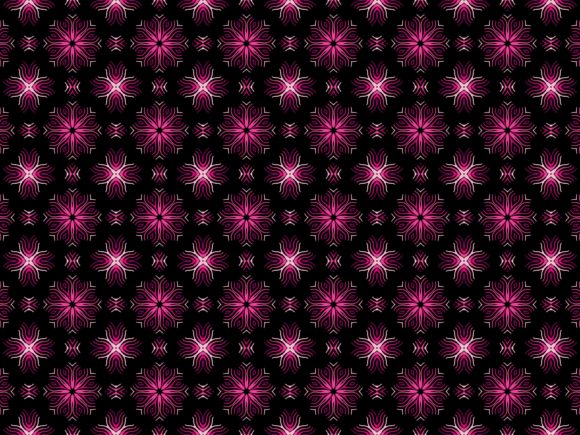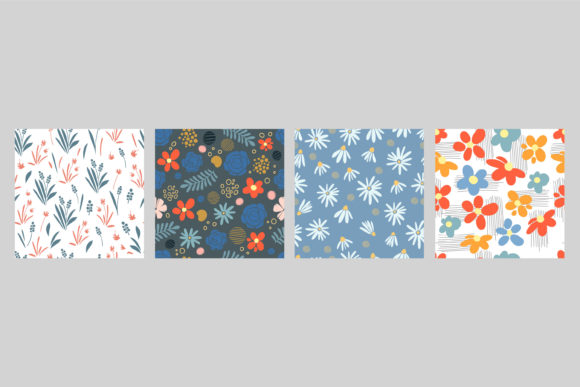
Floral Seamless Patterns. Vector Design: A Versatile Tool for Modern Creatives
In a design landscape where consistency and flexibility often pull in opposite directions, Floral Seamless Patterns. Vector Design emerges as a rare bridge between the two. For anyone working with paper goods, fabric, interior decor, or digital media, these endlessly repeatable floral motifs offer a way to add visual richness without sacrificing workflow efficiency. The appeal lies not only in their beauty but in their practicality: a well-crafted seamless vector floral pattern set can be dragged into the swatches bar of your design software and applied to any contour in seconds. This simplicity, combined with the inherent elegance of floral imagery, explains why these patterns have become essential for professionals and hobbyists alike.
What makes a pattern truly seamless is the mathematical precision of its repeats. In vector form, this precision is baked into the file, so you never have to worry about visible seams, awkward cuts, or color mismatches. Whether you are a freelance graphic designer preparing a custom wallpaper or a small business owner creating branded packaging, the ability to open a pattern set, drag a group into your swatches panel, and fill a shape instantly changes how fast you can iterate. Floral Seamless Patterns. Vector Design is not just about decoration—it is about streamlining the creative process while retaining control over scale, color, and placement.
Understanding Floral Seamless Vector Patterns and Their Relevance Today
A seamless vector pattern is, at its core, a tile that can repeat infinitely without any visible interruption. When we talk about floral seamless patterns, we are referring to motifs drawn from nature—blossoms, leaves, vines, petals—arranged in a way that allows them to flow across any surface. The vector format means these patterns are resolution-independent, so they look crisp on a business card, a billboard, or a fabric print. This technical advantage has made vector floral patterns a staple in modern design workflows, where the same asset often needs to work across print, web, and physical products.
The relevance of these patterns has grown as more creators seek cohesive branding across multiple touchpoints. A surface pattern that works on a notebook cover can also be used on the brand’s website background, in social media templates, and on product packaging—if it is in vector, seamless, and easy to apply. The promise of seamless vector floral pattern sets is that you can achieve this consistency without reworking the artwork for every medium. You simply drag the group into your swatches bar, and the pattern becomes a fill that you can adjust, rotate, or scale as needed.
Why Floral Seamless Patterns Are Gaining Attention Across Industries
The rise of print-on-demand services, small-batch manufacturing, and personalized interior decor has created a hunger for ready-to-use design assets that still feel custom. Entrepreneurs launching home decor lines, bloggers creating cohesive online aesthetics, and educators preparing engaging materials all benefit from patterns that look intentional and polished. Floral Seamless Patterns. Vector Design fits this need because it offers both sophistication and speed. A single pattern set can contain multiple colorways and motif variations, giving the user a range of options without requiring them to become a master illustrator.
Consumer expectations have also shifted. Audiences today are visually literate and quick to notice when a design feels repetitive or poorly executed. A seamless pattern that repeats flawlessly communicates attention to detail, which builds trust. For businesses and creators, using high-quality vector floral patterns is a signal that the brand cares about its visual identity. Additionally, the sustainability movement has increased interest in digital-first design: by using vector patterns, creators can preview and iterate without wasting physical materials, which is a practical advantage for fabric designers and interior decorators who need to test layouts before committing to production.
The Evolution of Floral Pattern Design: From Hand-Drawn to Drag-and-Drop
Floral patterns have a long history in art and decoration, from William Morris wallpapers to Liberty prints. Traditionally, creating a repeat pattern required meticulous hand-drawing, tracing, and testing. The digital revolution changed this, but early digital patterns still required careful tile alignment and often suffered from visible seams. The development of vector-based seamless pattern tools and software features—like the ability to define a pattern swatch from any group of objects—transformed the process entirely.
Today, a designer can open a seamless vector floral pattern set, select the group of motifs, and drag it directly into the swatches bar of programs like Adobe Illustrator. The software automatically calculates the repeat, and the user can then fill any shape, text, or path with the pattern. This evolution has democratized pattern design: you no longer need advanced illustration skills to apply sophisticated floral repeats. You simply need a good set of vectors and an understanding of how to use swatches effectively. As a result, floral seamless patterns are no longer the province of specialist surface pattern designers—they are tools available to any creative professional.
Practical Applications Across Media and Materials
The versatility of floral seamless patterns is best understood through the variety of surfaces they enhance. Here are some of the most common applications where vector floral patterns excel:
- Paper and book covers: A delicate floral repeat can transform a simple notebook or journal into a premium product. Because the pattern is vector, it scales perfectly for different book sizes without losing detail.
- Fabric design: Textile designers use seamless patterns to create all-over prints for apparel, upholstery, and accessories. Vector files ensure that the print remains sharp at any scale, from a small scarf to a large curtain panel.
- Interior decor: Wallpaper, wrapping paper, gift boxes, and home accessories all benefit from seamless repeats. Interior decorators and DIY enthusiasts can use these patterns to create coordinated looks across multiple elements in a room.
- Web design and online style: Backgrounds, hero sections, social media templates, and digital stationery often incorporate floral patterns to add texture and warmth. A vector pattern loads efficiently and looks crisp on retina displays.
- Branding and packaging: Small businesses and entrepreneurs use floral patterns to differentiate their products on crowded shelves. A unique pattern inside a box or on a label can improve unboxing experience and brand recall.
For each of these applications, the key advantage is the same: you take the pattern set, drag the group into your swatches bar, and fill the contours you have defined. No manual tiling, no guesswork, no wasted time.
How to Use a Seamless Vector Floral Pattern Set in Your Projects
Using a floral seamless pattern set is straightforward, but a few practical tips can make the process smoother. When you open a well-organized vector file, the patterns are usually grouped and labeled. To apply one, follow these steps:
- Open the pattern set in your vector editing software (such as Adobe Illustrator or Affinity Designer).
- Locate the group that contains the floral pattern you want to use.
- Drag the entire group into the swatches bar. The software will recognize the artwork as a pattern tile and add it to your swatches panel.
- Select the shape, text, or path you want to fill, then click the new swatch. The pattern will tile seamlessly across the selected contour.
- Adjust the scale, rotation, or position of the pattern using the transform tools. In most vector applications, you can also edit the original pattern tile to customize colors or motifs.
This drag-and-switch workflow is what makes Floral Seamless Patterns. Vector Design so accessible. You do not need to understand the math of repeats; the file has already done that work. Your role is to choose the right pattern and apply it where it enhances your project.
Choosing the Right Floral Seamless Pattern for Your Brand or Project
Not all floral patterns carry the same visual weight. A large-scale, open bloom pattern might feel romantic and dramatic, while a tiny, delicate leaf repeat could read as minimalist and modern. When selecting a vector pattern set, consider the mood you want to convey. Pattern sets that include multiple color variations give you flexibility to match brand palettes or seasonal themes. Also pay attention to motif density: a dense pattern can overwhelm a small product, while a sparse pattern might disappear on a large surface.
For fabric and interior decor applications, think about how the pattern will wrap around corners, seams, or curved surfaces. A well-designed seamless pattern will flow naturally regardless of where the cut falls. If you are using the pattern in web design, test it at different screen sizes to ensure the repeat remains visually balanced. The best seamless vector floral pattern sets are those that look intentional at every scale—and that is a hallmark of careful vector construction.
Integrating Floral Patterns into Digital and Print Workflows
Modern design workflows often require moving assets between print and digital environments. A vector floral pattern is ideal for this because it remains editable and resolution-independent. You can use the same pattern file as a fill for a print-ready PDF and as a background tile for a website. If you need to change a color to match a new branding direction, you can edit the original vector swatch once and all instances update automatically—provided you have linked or saved the pattern as a symbol.
For marketers and content creators, floral patterns can be used to create cohesive visual themes across blog posts, email newsletters, and social media graphics. A pattern that echoes your brand’s packaging helps reinforce recognition. Bloggers and educators often use floral seamless patterns as backgrounds for quotes, headers, or product photography mockups. Because the pattern is vector, it can be exported as a PNG, SVG, or EPS depending on the platform, making it adaptable to different technical requirements.
The Role of Floral Seamless Patterns in Interior Decor and Fabric Design
Interior decor has seen a resurgence of patterned surfaces, from accent walls to upholstery and throw pillows. Homeowners and designers alike appreciate the ability to customize spaces without commissioning custom artwork. A seamless vector floral pattern can be scaled to fit a single cushion or an entire sofa, costing a fraction of a bespoke design. For fabric design, the vector format allows for accurate color separation and repeat calculation, which is essential for textile printing.
Small-scale decor businesses, in particular, benefit from using pattern sets that can be applied to multiple products. A single floral design might appear as a wallpaper, a fabric, and a gift wrap, creating a coordinated product line. The ease of dragging a pattern into a swatch bar means that even a one-person studio can produce a range of decorated goods without needing a large design team.
Tips for Working with Seamless Vector Patterns in Web Design
Using floral patterns online requires attention to file size and responsiveness. Vector patterns exported as SVGs are lightweight and scale beautifully on all devices. When applying a pattern as a background in CSS, you can reference the SVG file and control its repeat behavior with standard styling. If you are using the pattern within a design tool like Figma or Sketch, you can import the vector file, create a pattern fill, and maintain editability for later adjustments.
Avoid patterns that are too busy for digital reading environments; they can distract from content or make text hard to read. Instead, use floral patterns in areas like hero sections, headers, or product thumbnails where the visual texture enhances the design without overwhelming it. The same pattern, scaled down and used as a watermark or accent, can add subtle brand personality.
A Forward-Looking Yet Practical Perspective
As design tools continue to become more intuitive, the barrier to using professional-grade patterns will keep lowering. Already, drag-and-drop pattern swatches are standard features in major vector editors. Looking ahead, we can expect more cloud-based pattern libraries, AI-assisted color variations, and seamless integration between print and digital platforms. The core value of Floral Seamless Patterns. Vector Design will remain: they give creators a way to apply intricate, repeatable beauty to any surface with minimal effort.
For now, the most practical step is to start with a quality vector floral pattern set, learn the simple act of dragging a group into the swatches bar, and experiment with filling different contours. Whether you are designing a fabric collection, a website background, or a product package, these patterns offer a reliable shortcut to visual cohesion. They are a quiet workhorse of the design world—reliable, beautiful, and endlessly useful.