Enduring Influence of Portuguese Azulejos Tiles Patterns in Modern Design
The visual language of Portuguese azulejos tiles patterns carries a narrative spanning centuries, from the sun-drenched facades of Lisbon to the storytelling panels of the São Bento Railway Station. This rich artistic heritage has found a vibrant, functional new life in the digital creative space. For contemporary designers, illustrators, and brand strategists, the challenge has historically been capturing the authentic, handcrafted essence of these ceramic masterpieces while adapting them to the technical demands of modern media. The solution increasingly lies in meticulously crafted asset libraries that respect the original artistry while providing the practical flexibility required for commercial use. The availability of a dedicated pattern set, born from this tradition, represents a significant tool for anyone serious about visual storytelling.
Characteristics That Define Authentic Tile-Inspired Geometry
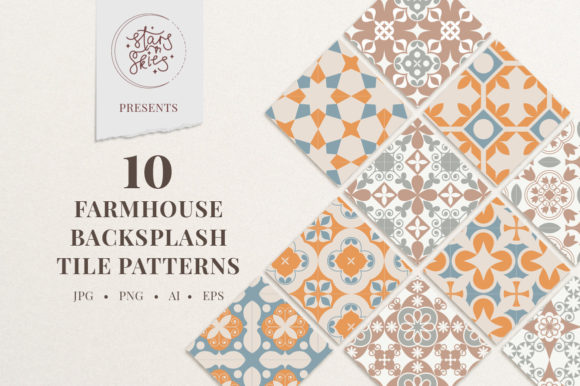
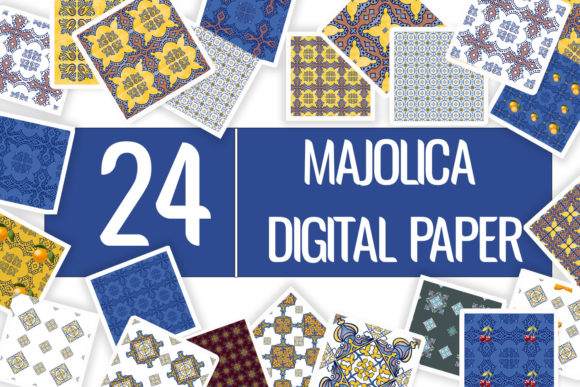
At the core of any compelling Portuguese azulejos tiles patterns lies a sophisticated interplay between strict geometry and organic, narrative-driven motifs. The tradition incorporates symbolic elements ranging from arabesques and crosses to botanical specimens and Mediterranean fruits. An effective digital adaptation preserves these nuances. When examining a hand-drawn collection, the texture is the immediate differentiator. Instead of sterile, mathematically perfect vectors, these patterns carry the slight irregularities in line weight and saturation that give them a tangible, artisanal feel. The inclusion of Mediterranean fruits is particularly strategic; the organic curves of citrus and pomegranates provide a necessary counterbalance to the rigidity of geometric tile grids. This tension creates dynamic visual fields that prevent the overall design from feeling cold or overly mechanical. High-resolution assets, such as those offered at 3600 x 3600 pixels and 300 dpi, are essential for preserving these delicate details across different scales, from a small greeting card to a full-size textile print.
Strategic Deployment Across Creative Disciplines
The utility of a well-constructed pattern set extends across nearly every visual medium. Understanding where and how to apply these backgrounds is key to maximizing their impact.
Branding and Identity Systems
A logo or business card infused with the warmth of an azulejo tile pattern immediately communicates heritage, craftsmanship, and a distinct point of view. This is particularly powerful for hospitality brands, boutique hotels, or artisanal food packaging. The pattern is not merely a background; it becomes a brand anchor. With a set of 24 coordinated options, a brand can maintain a cohesive visual identity across stationery, signage, and digital platforms without descending into visual monotony. The ability to swap between a dense, complex tile for a formal letterhead and a lighter, airier geometric pattern for a website banner allows for sophisticated brand storytelling.
Event Design and Stationery
Creative entrepreneurs specializing in wedding and event design find these assets invaluable. Boho wedding invitations, save-the-date cards, and seating charts can all draw from the same pattern ecosystem, ensuring a unified visual experience for the guest. The bohemian atmosphere often relies on texture, pattern, and a connection to the artisanal. Portuguese azulejos tiles patterns fit seamlessly into this philosophy. They bring a sense of history and global travel to the project. A set of tiled backgrounds allows the designer to create a full suite of collateral—from menu cards to thank-you notes—with a consistency that is difficult to achieve when sourcing disparate clip-art elements.
Product and Textile Design
In the realm of textiles and apparel, high-resolution files are non-negotiable. A hand-drawn pattern printed on a silk scarf, a canvas tote bag, or a ceramic mug requires the razor-sharp detail that only optimized files can provide. The reference to Mediterranean fruits and geometric abstraction lends itself perfectly to summer collections and home decor. Creators can use the patterns as all-over prints for fabric or as smaller accent graphics for labels and hang tags. The inclusion of a bitmap version of the ornaments means the designer has a high-quality starting point that can be colorized or distressed further to match the specific texture of the substrate.
The Pragmatic Advantages of a Specialized Pattern Library
Working from a comprehensive set of 24 coordinated backgrounds fundamentally streamlines the creative workflow. Instead of designing a custom tile from scratch for every application, a designer can select, modify, and deploy. The "tiled and editable" nature of a professional bitmap package provides significant operational benefits:
- Resolution Versatility: Assets must function across print and digital channels. The 3600 x 3600 pixel dimension at 300 dpi is an industry standard that ensures crisp output on large format prints while remaining manageable for digital rendering.
- Artistic Integrity: The hand-drawn quality provides a warmth that purely vectorized, sterile patterns often lack. The slight imperfections and organic line weights add tangible value to the final product, distinguishing it from mass-market, algorithmically generated textures.
- Immediate Usability: Because the files are pre-rendered as separate JPGs, there is no need to open complex vector software or manage difficult plugins. The patterns can be dragged directly into software like Procreate, Photoshop, or Canva, making them accessible to both seasoned professionals and hobbyists.
- Thematic Cohesion: A collection of 24 patterns ensures that every element in a project feels like it belongs to the same family. This reduces the risk of visual fragmentation that can occur when pulling assets from different sources.
Expanding the Creative Palette with Thematic Diversity
What elevates a pattern set from a simple "good" to an indispensable creative resource is its thematic range within a cohesive collection. A set inspired by Portuguese azulejos tiles patterns should explore variations in color palette, motif complexity, and scale. The traditional blues and whites of classic tiles are timeless, but the addition of contemporary summer palettes allows the patterns to appeal to modern branding sensibilities. Some backgrounds might feature dense, intricate geometric webs suitable for focal points, while others offer subtle, low-contrast textures ideal for text overlays. The inclusion of botanical elements like Mediterranean fruits adds a layer of organic softness. This range provides a robust vocabulary for the designer, allowing them to speak in different visual tones—whether it is the formality of a logo mark or the relaxed feel of a web banner—without ever leaving the stylistic universe of the azulejo tradition.
Bridging Hand-Drawn Art and High-Tech Output
The process of digitizing traditional art requires careful consideration. Scanning at high resolution, cleaning the bitmap files, and ensuring seamless tiling without losing the "hand" of the artist is a technical feat. A well-prepared package effectively provides solved problems for the designer, delivering a bitmap version of the ornaments that is ready for immediate use. This hybrid approach respects the slow, deliberate craft of illustration while acknowledging the speed and flexibility required in a commercial environment. For educators and students, studying these patterns offers insight into how cultural heritage can be translated into functional design assets without dilution of the original aesthetic.
Quality Benchmarks for Digital Textures
When evaluating digital asset libraries, several benchmarks indicate professional-grade quality. The first is the balance between detail and file weight. A 3600 x 3600 pixel file must be compressed responsibly to ensure it is easy to download and store, but not so aggressively that the fine lines of the hand-drawn elements become pixilated or blurry. The second benchmark is the seamlessness of the tile. A poorly executed tile will have visible edges or repeating "step" marks that ruin the illusion of a continuous surface. Professional sets are crafted with these technical details in mind. Third, the consideration of commercial licensing within the usage guidelines allows small business owners and freelance creators to use the patterns for logo design, packaging, and merchandise with confidence, knowing their branding is built on a legally sound foundation. The integration of these quality benchmarks into a single collection ensures that the final output—be it a website, a textile, or a wedding suite—carries a level of polish that elevates the entire project.