Creating with Precision: The Practical Value of Mandala Design for Patterns Vol.30
When design resources offer both aesthetic versatility and technical compatibility, they become indispensable tools for creative professionals and hobbyists alike. Mandala Design for Patterns Vol.30 represents a curated collection that bridges the gap between intricate artistic tradition and modern digital workflow. Understanding what this volume offers, how its file formats function across different software environments, and where its applications fit best can help users integrate mandala patterns into projects with confidence and efficiency.
The appeal of mandala patterns lies in their symmetrical, meditative quality—circles within circles, repeating motifs that draw the eye inward. Mandala design for patterns – You can Easily Use it for your various project. This statement holds true because the collection is constructed not just for visual richness but for adaptability across platforms, from vector-based illustration to raster editing, print production, and even CNC or laser cutting workflows.
File Format Breakdown: Why Each Format Matters
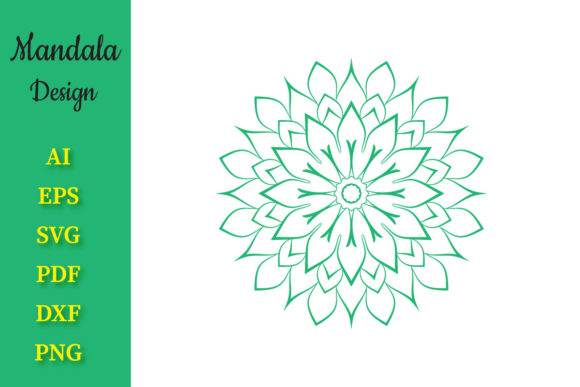
The download package includes six file types: AI, EPS, high-quality PNG, SVG, DXF, and PDF. Each serves a distinct purpose, and understanding these differences helps users avoid frustration when transferring files between programs or preparing them for different outputs.
AI and EPS: The Vector Foundation
Both AI (Adobe Illustrator) and EPS (Encapsulated PostScript) files are vector-based, meaning the mandala patterns are defined by mathematical paths rather than pixels. This allows infinite scaling without loss of quality. The provided files are compatible with Adobe Illustrator CS CC versions, which ensures they open correctly in modern releases as well as earlier iterations. For users who work in CorelDRAW, Affinity Designer, or Inkscape, EPS often serves as a reliable interchange format. The vector structure means you can dissect the mandala—change stroke weights, recolor individual petal layers, or combine elements from multiple patterns without degrading the original artwork.
High-Quality PNG: Raster Readiness
For situations where vector software is not available or where a transparent background is needed quickly, the high-quality PNG files offer a resolution-rich alternative. These are particularly useful for digital mockups, social media graphics, or web use where the mandala pattern serves as a watermark, background texture, or decorative overlay. Because the PNGs are derived from the original vector sources, they retain sharp edges and clean color separation, avoiding the aliasing that sometimes plagues lower-resolution raster files.
SVG: Web and Development Friendly
Scalable Vector Graphics (SVG) have become a standard for web-based design, interactive applications, and responsive user interfaces. Including SVG in the package means developers and web designers can embed the mandala patterns directly into HTML without heavy image file sizes. SVGs are also editable in text editors and lightweight code environments, making them suitable for dynamic styling, animation, or integration with JavaScript libraries that manipulate vector paths in real time.
DXF: Bridging Design and Fabrication
DXF (Drawing Exchange Format) is frequently used in CAD software, laser engraving, vinyl cutting, and CNC routing. For artists and makers who want to transfer a mandala pattern onto a physical medium—acrylic, wood, leather, or even paper for die-cutting—the DXF format eliminates the need to trace or redraw the design from scratch. The inclusion of DXF in Mandala Design for Patterns Vol.30 directly addresses the needs of sign makers, product designers, and crafters who work with cutting machines or engraving systems.
PDF: Universal Access and Print Proofing
PDF files offer a universal viewing and printing format that preserves layout, color, and vector integrity. Whether a user needs to send a pattern for professional printing, include it in a client proposal, or simply view the design without specialized software, the PDF version provides a reliable fallback. It also functions well for proofing before committing to a final production run.
Practical Applications Across Different User Groups
The strength of Mandala Design for Patterns Vol.30 lies not only in its file variety but in the breadth of projects it can support. Below are several scenarios where these patterns become more than decorative elements—they become functional components of a larger workflow.
Print Design and Publishing
Print-ready files are explicitly mentioned in the product description, and for good reason. Graphic designers working on book covers, album art, packaging, or stationery can import the EPS or PDF files directly into layout software like InDesign or QuarkXPress. The mandala patterns can be used as full-page backgrounds, subtle repeating textures, or focal point illustrations. Because the files are vector, they scale up for large-format posters or banners without pixelation, and they can be color-separated easily for screen printing or foil stamping.
Surface Pattern Design and Textiles
For surface pattern designers, the mandala motifs can be arranged into seamless repeats. The symmetrical nature of mandalas makes them ideal for tile-able patterns on fabric, wallpaper, gift wrap, or ceramic surfaces. Using the AI or SVG files, designers can experiment with color palettes, scale variations, and rotational symmetry. The EPS format allows export to specialized textile design software that may require vector input for engraving screens or digital printing.
Digital Illustration and Asset Creation
Illustrators who build complex compositions can use the individual mandala elements as building blocks. Each pattern can be layered, masked, or combined with other graphics to create intricate scenes. The high-quality PNG files are immediately usable as overlays in Procreate, Photoshop, or Affinity Photo, while the vector files allow for modification of anchor points and curves. This flexibility means the patterns function both as finished assets and as raw material for further artistic development.
Laser Cutting, Engraving, and CNC Crafts
With DXF support, the mandala patterns become directly usable in LightBurn, LaserGRBL, or other laser control software. Hobbyists and small business owners who produce engraved wooden plaques, acrylic ornaments, leather journal covers, or metal jewelry can import the DXF files with minimal adjustment. The closed paths in well-designed vector mandalas reduce the risk of burn-through or incomplete cuts, and the intricate details can be adjusted in scale to match material thickness and laser power. The symmetry of the designs also helps in nesting multiple patterns efficiently on a single sheet of material.
Educational and Therapeutic Uses
Educators teaching graphic design, geometry, or cultural studies can use the patterns as examples of radial symmetry, tessellation, and cultural ornamentation. The availability of SVG files allows students to inspect the code behind the shapes, while the PDF and AI versions enable hands-on manipulation. Art therapists and mindfulness practitioners may also find value in the patterns as coloring templates or meditation aids, especially when printed from the high-resolution PNG or PDF files.
Key Advantages of Working with a Multi-Format Mandala Collection
Choosing a design set that includes all six file types removes many of the common friction points in creative workflows. Users do not need to hunt for converters, rebuild paths manually, or compromise on quality when switching between software. Some specific advantages include:
- Time savings: Because the files are already prepared in industry-standard formats, the time between opening the download and placing the design into a project is measured in seconds, not hours.
- Cross-platform compatibility: Whether the user works on Windows, macOS, or Linux, the PDF and SVG formats are supported natively, and the AI/EPS files open in a wide range of vector editors.
- Scalability without degradation: Vector formats ensure that the same mandala can appear on a business card and a billboard without redrawing or resolution loss.
- Editability: Users can ungroup, recolor, reshape, and combine elements from different patterns within the collection, enabling custom compositions that feel original while building on proven designs.
- Production readiness: The DXF and PDF files are already configured for output, so minimal prep work is required before sending to a printer, engraver, or cutter.
Considerations for Different Work Environments
While the collection is designed for broad usability, certain environments may require minor adjustments. For example, users working exclusively in Affinity Designer or CorelDRAW should verify that the AI file version opens without font or stroke discrepancies—typically, the EPS format provides the most reliable cross-import experience. For laser cutting, checking that all paths in the DXF file are fully closed is recommended, though mandala patterns created from clean vector sources usually meet this requirement. Web developers using SVG should consider whether the patterns contain hidden layers or grouped elements that may need simplification for lightweight embedding.
Print professionals should note that the PDF files are likely set with default CMYK or RGB profiles; for commercial printing, it is wise to verify color space and add bleed if needed. These are standard considerations for any design asset, and Mandala Design for Patterns Vol.30 provides a consistent foundation that reduces the need for extensive pre-processing.
Observations on Design Quality and Aesthetic Range
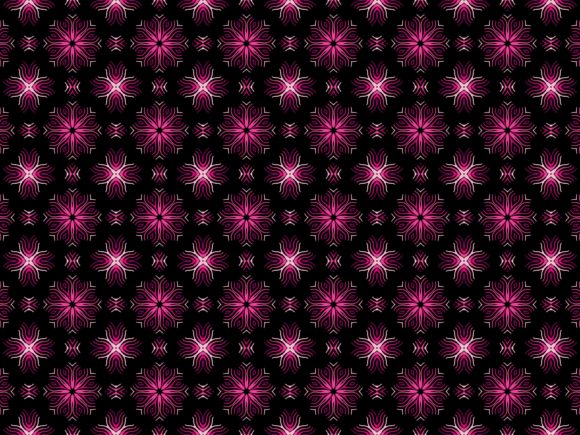
The patterns in Volume 30 follow the conventions of classical mandala construction: concentric rings, petal-like shapes, dot clusters, and boundary outlines that create a sense of harmony and balance. Yet within that framework, there is observable variation in density—some patterns are light and airy with large negative spaces, while others are densely packed with fine details. This range allows users to select a pattern that matches the mood of their project, whether that is minimal and modern or ornate and traditional.
Color treatments in the collection appear to be designed for easy recoloring rather than prescriptive palettes. The vector files likely use simple fills and strokes rather than gradients or complex meshes, which makes global color replacement straightforward. For users who want to apply brand colors or seasonal palettes, this simplicity is an asset rather than a limitation.
How the Collection Fits Into a Larger Creative Strategy
For designers who produce a high volume of work—such as product designers on Etsy, freelance graphic designers, or marketing teams creating seasonal campaigns—having a reliable set of mandala patterns reduces repetitive work. Instead of drawing a new mandala from scratch for every project, they can adapt, combine, and customize pre-existing vector art. This does not replace original creativity but frees up time for higher-level compositional decisions, color theory, and client communication.
Small business owners who sell customized goods—engraved gifts, printed merchandise, decorated packaging—benefit from the DXF and PNG formats because they can quickly test a pattern on different products without re-entering the design in multiple programs. The SVG format also allows them to offer digital products such as printable coloring pages or SVG cut files for other crafters.
Educators and researchers studying pattern theory, symmetry groups, or South Asian art traditions can use the collection as a visual reference. The ability to export to PNG for presentations or to PDF for lecture notes makes integration into academic work seamless. While the designs are decorative, their structural properties are pedagogically useful for demonstrating geometric concepts like rotational symmetry, tessellation, and radial balance.
Practical First Steps for New Users
After downloading the collection, a logical starting point is to open the PDF file for a full overview of the patterns. This provides a broad view of the style and density range without needing to open each file individually. Next, importing the SVG or AI file into the user's primary design application allows for direct manipulation. Trying a simple global color change on one pattern helps gauge how the layers are organized and whether the strokes and fills are grouped intuitively. For fabrication workflows, converting one of the DXF files to the appropriate unit scale (mm or inches) and running a test cut on scrap material verifies that the paths are suitable for the machine and material in use.
The collection is designed to be immediately functional, but like any creative resource, it rewards experimentation. Combining two patterns at different scales, using a mandala as a clipping mask, or fragmenting parts of the design for a modern collage aesthetic are all ways to move beyond direct reproduction and into original expression.
Mandala Design for Patterns Vol.30 is more than a set of decorative images. It is a multi-format toolkit that acknowledges the reality of modern design work: that software ecosystems are diverse, output requirements vary, and creative professionals need assets that can move fluidly between digital and physical realms. Whether the goal is to produce a fine art print, a laser-engraved product, a website background, or an educational handout, the combination of AI, EPS, PNG, SVG, DXF, and PDF files ensures that the pattern you choose can follow you through every stage of your workflow.