8 Golden Seamless Square Patterns: A Practical Guide for Designers, Marketers, and Content Creators
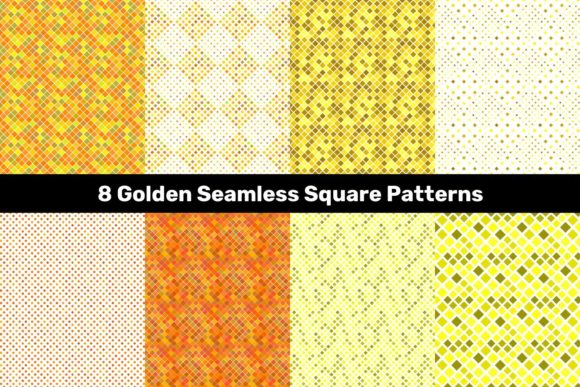
Pattern assets often sit in a folder, downloaded once and rarely touched again. But a well-curated set like the 8 Golden Seamless Square Patterns changes that dynamic. This collection, which includes 8 high-resolution JPG files at 5000x5000 pixels plus vector formats in EPS and AI, is designed for real-world application across multiple disciplines. Whether you are a graphic designer building branding systems, a marketer producing social media templates, or a small business owner refining product packaging, these patterns offer a repeatable, scalable visual foundation.
The term "golden" here refers not only to the color palette but also to the proportional care built into each tile. Seamless square patterns eliminate visible edges, allowing you to tile them across surfaces without interruption. When you combine that technical reliability with the flexibility of vector and raster formats, you gain a resource that fits into almost any production pipeline without modification headaches.
What Makes These Patterns Different From Generic Collections
Most pattern packs offer either low-resolution raster files or vector files that require manual cleanup before use. The 8 Golden Seamless Square Patterns package provides both. You get 8 JPG files at 5000x5000 pixels, which is enough resolution for large-format printing up to poster size or banner dimensions. The print-ready clarity means you can use them for product mockups, fabric design previews, or wallpaper renders without worrying about pixelation.
The vector files in EPS and AI formats give you full control over scaling. A pattern that works as a phone wallpaper can be scaled to a billboard. You can recolor elements, adjust spacing, or combine patterns without losing sharpness. This dual-format approach is rare in consumer-grade asset packs and directly addresses the needs of professionals who move between digital and print workflows.
Each pattern in the set follows a square tile logic. This means you can repeat the pattern in any direction and the edges will match perfectly. For anyone who has spent time manually aligning repeating tiles in Photoshop or Illustrator, this is a significant time saver. The patterns are ready to load into a pattern swatch library, apply as a fill, or place as a background layer.
Where the 8 Golden Seamless Square Patterns Fit in a Real Workflow
Visual assets like these are not standalone products. They are components in a larger system of tools and decisions. Understanding where this package fits into your process will determine how much value you extract from it.
Pre-Production Planning and Mood Boarding
In the early stages of any creative project, you need reference materials that communicate texture and mood. The warm, metallic tones in these patterns make them ideal for branding projects that require a premium feel. Instead of searching for stock images or creating placeholder textures from scratch, you can drop one of the JPG files directly into a mood board in Figma, Canva, or Miro. The 5000x5000 resolution means you can zoom in and inspect detail without the image degrading, giving clients and stakeholders a clear sense of the final aesthetic.
For product packaging design, these patterns serve as a fast way to test how a repeated visual will look on a box, bag, or label. You can create mockups in minutes rather than hours by applying the seamless pattern as a fill over your packaging template. This speeds up client presentations and reduces the back-and-forth on visual direction.
During Active Design and Production
When you move into the build phase, the vector formats become your primary tool. The AI files open directly in Adobe Illustrator, and the EPS files work across CorelDRAW, Affinity Designer, and other vector editors. You can open a pattern, ungroup the elements, and customize the colors to match your brand palette. Because the patterns are seamless, you do not waste time fixing edge alignment after editing.
A practical example: You are designing a set of social media templates for a luxury brand. You need five different background textures that feel cohesive but distinct. With this pack, you can use one pattern as the background for the main feed posts, another for story templates, and a third for carousel covers. The consistent golden aesthetic ties the templates together, while the variation in pattern structure prevents visual monotony. Because the files are already prepared, you can produce the entire template set in one working session.
For print-on-demand sellers, these patterns are particularly useful. You can upload the seamless tiles directly to platforms like Printful or Printify for products such as phone cases, tote bags, and mugs. The vector files ensure that the pattern scales correctly across product sizes, so you maintain quality from a small sticker to a large hoodie.
Post-Production Consistency and Quality Control
After the main design work is complete, the patterns remain useful for quality control and asset management. Because the pack includes both raster and vector formats, you can archive the files in a way that suits your team's infrastructure. If your organization uses a design system or a shared asset library, you can import the patterns into Adobe Creative Cloud Libraries or a company-wide Figma component set. Team members can access the patterns without requesting file transfers or dealing with missing fonts or linked images.
The 5000x5000 JPG files also function as test images for output quality. Before sending a final print file to the press, you can apply the pattern to a test layout and check for color accuracy and resolution. The predictable, high-contrast nature of golden patterns makes it easy to spot rendering issues early.
Practical Implementation Tips for Different User Profiles
How you integrate this package depends on your primary tools and your output goals. Below are specific strategies for the most common use cases.
Graphic Designers and Branding Specialists
- Build a swatch library: Open each AI file, define the pattern as a swatch in Illustrator, and save them as a pattern library file. This gives you instant access across all future projects without re-importing.
- Layer with transparency: Experiment with opacity levels when using patterns as overlays. A golden pattern at 30% opacity over a dark background creates a subtle texture that reads as high-end.
- Combine patterns: Create compound backgrounds by masking one pattern with another using clipping masks. This produces custom textures that look entirely custom while using the base assets as building blocks.
Marketers and Social Media Managers
- Template consistency: Apply the same pattern across a campaign's worth of assets. Use the JPG files directly in Canva or Adobe Express for fast turnaround on posts, stories, and ads.
- Event branding: For webinars, product launches, or seasonal campaigns, use the patterns as virtual backgrounds for video calls or as email banner textures. The seamless nature means there are no awkward edges in landscape or square formats.
- A/B testing: Use different patterns in split tests for landing pages or ad creatives. The visual distinction between patterns is strong enough to test aesthetic preference without redesigning the entire layout.
Small Business Owners and Entrepreneurs
- Product differentiation: If you sell digital or physical products, use these patterns to create unique packaging, inserts, or digital covers. The golden palette conveys value and can justify premium pricing.
- Content creation velocity: Keep the JPG files in a dedicated folder for quick access. When you need a blog header, a Pinterest pin background, or an Instagram highlight cover, you can grab a pattern and place text in under two minutes.
- Consistency without a designer: If you work solo or with a small team, the pre-made nature of these patterns eliminates the need to commission custom textures. You maintain a professional look without ongoing design costs.
Educators and Content Publishers
- Course materials: Use patterns as section dividers, slide backgrounds, or workbook covers. The seamless tiles keep the visual theme consistent across dozens of pages.
- Presentation backgrounds: For slide decks in PowerPoint or Google Slides, apply a pattern as a background with reduced opacity. This adds visual interest without distracting from text and data.
- Resource creation: If you create educational handouts or worksheets, the patterns can frame content areas or serve as decorative borders. The vector files let you resize to exact page dimensions.
Organizing and Managing the Asset Library
A common bottleneck in asset-heavy workflows is file management. The 8 Golden Seamless Square Patterns package is small enough to organize quickly, but thoughtful setup now saves time later.
Create a folder structure that separates formats: a parent folder named "Golden Patterns" with subfolders for JPG, EPS, and AI. Within the JPG folder, consider adding a thumbnail preview folder for quick visual scanning. If you use a digital asset management tool like Eagle, Adobe Bridge, or a cloud-based system, tag each file with relevant keywords such as "seamless," "golden," "geometric," "luxury," "texture," and "square." This makes retrieval instant when you are under deadline pressure.
For teams, assign someone to maintain the master library. The vector files should remain untouched as originals, while designers can copy and modify working versions. This prevents accidental overwrites and ensures the base assets stay clean for future projects.
Quality Control and Long-Term Use
Pattern assets age better than many other design resources because trends in textures and backgrounds tend to cycle rather than expire. The golden palette and geometric nature of these patterns align with both current contemporary design and classic art deco influences. This means the pack remains useful across seasonal rebrands and trend shifts.
To extend the lifespan of the assets, occasionally review your library. Remove duplicates if you have accumulated other pattern packs, and update your tagging system if your project naming conventions change. The vector formats in EPS and AI are particularly future-proof because they do not rely on specific versions of design software. An EPS file created today will open in vector editors a decade from now.
When using the patterns commercially, check the licensing terms of the package. Most pattern packs sold by reputable creators allow commercial use in products, marketing materials, and branding without attribution. Understanding the license boundaries protects you legally and ensures you can use the patterns confidently in client work or merchandise.
Expanding the Use Cases Beyond Design
While these patterns are clearly design-oriented, their utility extends into areas that might not be immediately obvious. For example, event planners can use the JPG files to preview table linens, invitation textures, or stage backdrops. Educators teaching graphic design can use the pattern files as case studies in seamless tile construction, showing students how to build their own repeating assets. Hobbyists working on digital scrapbooking, crafting, or game asset creation can use the patterns as starting points for larger texture libraries.
The 5000x5000 resolution also makes these patterns suitable for video production. You can use them as background plates in motion graphics, lower-third textures, or transition elements. Import the JPG into After Effects, and because it is seamless, you can animate panning across the tile without visible seams. This single application opens up professional video workflows for creators who primarily work in static design.
Final Observations on Integration and Efficiency
The value of the 8 Golden Seamless Square Patterns package lies not in the patterns themselves, but in how they slot into existing routines. A designer who spends hours creating background textures from scratch can reclaim that time for higher-value work like composition, typography, and client communication. A marketer who needs consistent visual assets across platforms can deploy these patterns without waiting for design support. A business owner can maintain a polished brand presence without ongoing creative overhead.
When evaluating any asset pack, ask yourself: does this reduce friction in my current process, or does it create new steps? This package reduces friction because it respects file format standards, provides resolution flexibility, and delivers aesthetic cohesion. The inclusion of both raster and vector formats means you are not locked into a single application. You can work in Photoshop, Illustrator, Canva, Affinity, Figma, or even PowerPoint and still use the assets effectively.
Make the patterns work for you by placing them intentionally into your workflow. Use them early for exploration, mid-cycle for production, and late for consistency checks. Archive them properly, tag them clearly, and revisit them when starting new projects. A well-integrated asset library becomes invisible in the best way: you stop thinking about the tool and focus entirely on the outcome.